Why GOTS
A standard created to unify organic textile certification globally
Before GOTS (Global Organic Textile Standard) existed, multiple national and private organic textile standards covered different parts of the textile supply chain. Different criteria, approaches and requirements created complexity for brands, manufacturers and Certification Bodies operating internationally.
Recognising the global nature of textile production, leading organisations came together in 2002 to create one harmonised international standard for organic textiles.
The result was GOTS: a unified global system for the processing, manufacturing and labelling of textiles made with organic fibres.
Today, GOTS provides a common approach across global supply chains through an internationally recognised standard.

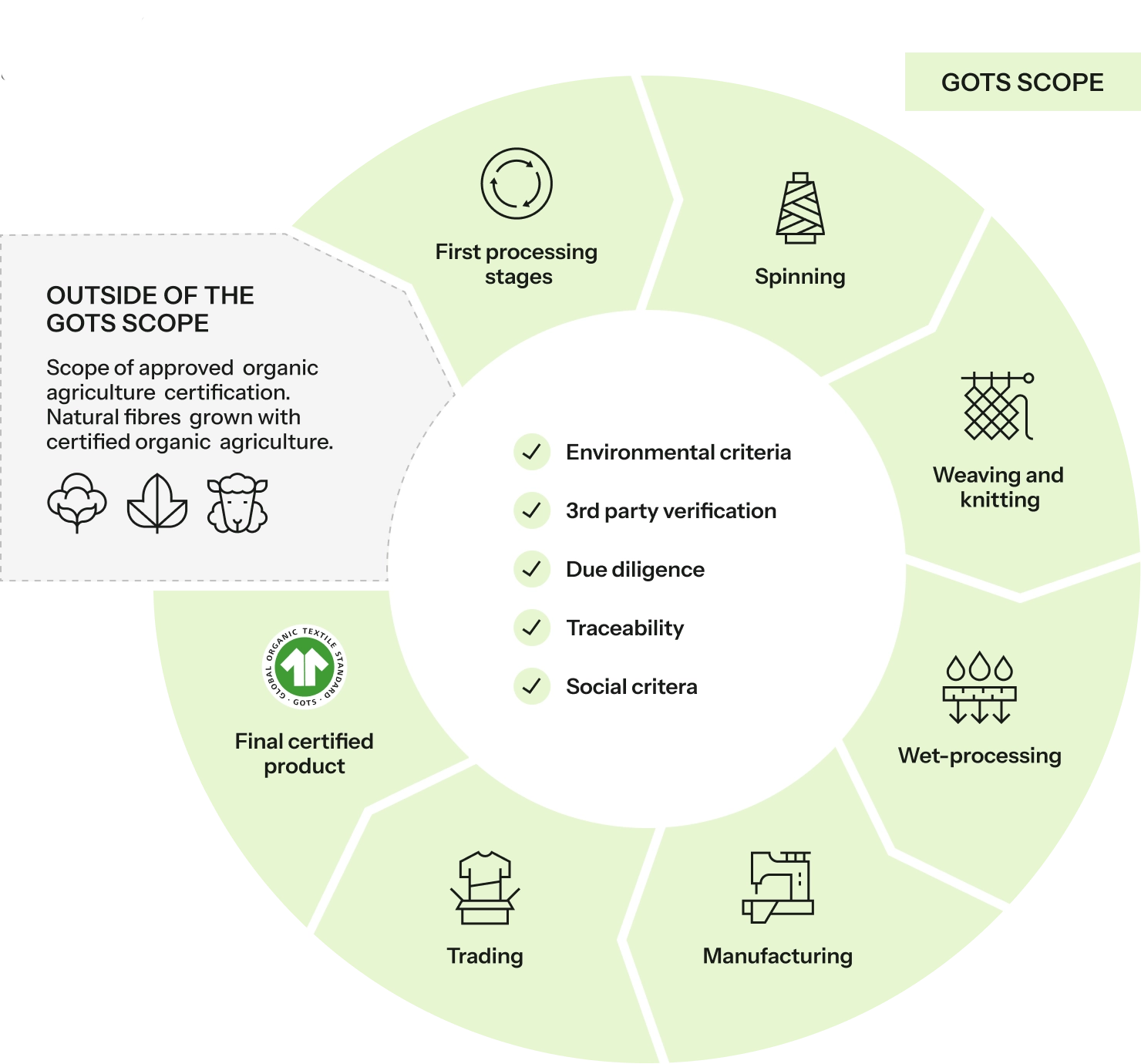
Which areas does the Global Organic Textile Standard cover?
-
organic fibre requirements
-
chemical input restrictions
-
chemical input approval system
-
environmental criteria
-
human rights including social responsibility criteria
-
processing and manufacturing requirements
-
product safety requirements
-
traceability and labelling rules
Strong arguments in favour of the Global Organic Textile Standard (GOTS)
A globally recognised system for organic textiles
GOTS provides a consistent and internationally recognised benchmark for the processing and manufacturing of textiles made with organic fibres.
Certification across the entire supply chain
GOTS certification starts where organic farming ends. Every processing and manufacturing stage, from fibre processing to finished product, must be certified to enable well-founded product claims.
Independent verification
All certified facilities along the supply chain are audited by approved independent Certification Bodies through annual on-site inspections and additional risk-based measures.
Environmental and chemical requirements
GOTS sets strict criteria for environmental management including wastewater, air and GHG emission, packaging and textile waste. To proactively safeguard the responsible processing practices throughout textile production, GOTS operates a chemical approval scheme where chemicals are assessed against strict GOTS chemical input criteria and listed under GOTS Positive List.
Human rights including social responsibility criteria
GOTS includes human rights including social requirements aligned with internationally recognised norms and frameworks, covering issues such as safe working conditions, the prohibition of child labour and forced labour, non-discrimination, fair treatment and responsible employment practices.
Traceability and transparent claims
Transaction Certificates and labelling requirements support traceability and help brands and retailers communicate claims with greater credibility and consistency. A GOTS Transaction Certificate (TC) is required each time ownership of certified goods changes hands.
Trusted by leading brands and manufacturers worldwide
GOTS is used globally by brands, manufacturers, processors, traders and retailers seeking a recognised and credible approach to certified organic textiles.
Why companies choose GOTS
Supporting regulatory preparedness
GOTS helps companies align with increasing expectations around traceability and supply chain transparency.
Strengthening supply chain credibility
GOTS provides independently verified claims instead of self-declared sustainability statements.
Meeting market expectations
GOTS helps companies respond to growing demand for certified organic textile products from brands, retailers and consumers.
One recognised standard across global operations
GOTS provides a globally established system recognised across international textile supply chains, helping reduce fragmentation and complexity compared to multiple regional approaches.
Reducing claim-related risk
Clear criteria, approved inputs and controlled labelling help support more reliable product communication.
More than a label, GOTS is a globally harmonised system for credible organic textile processing and manufacturing.