The GOTS system combines:
- processing in certified supply chains
- controlled material inputs
- independent third-party verification
- Transaction Certificates
- controlled label approval procedures
- trademark protection and enforcement
Together, these elements help strengthen the credibility and consistency of GOTS claims across global textile supply chains.

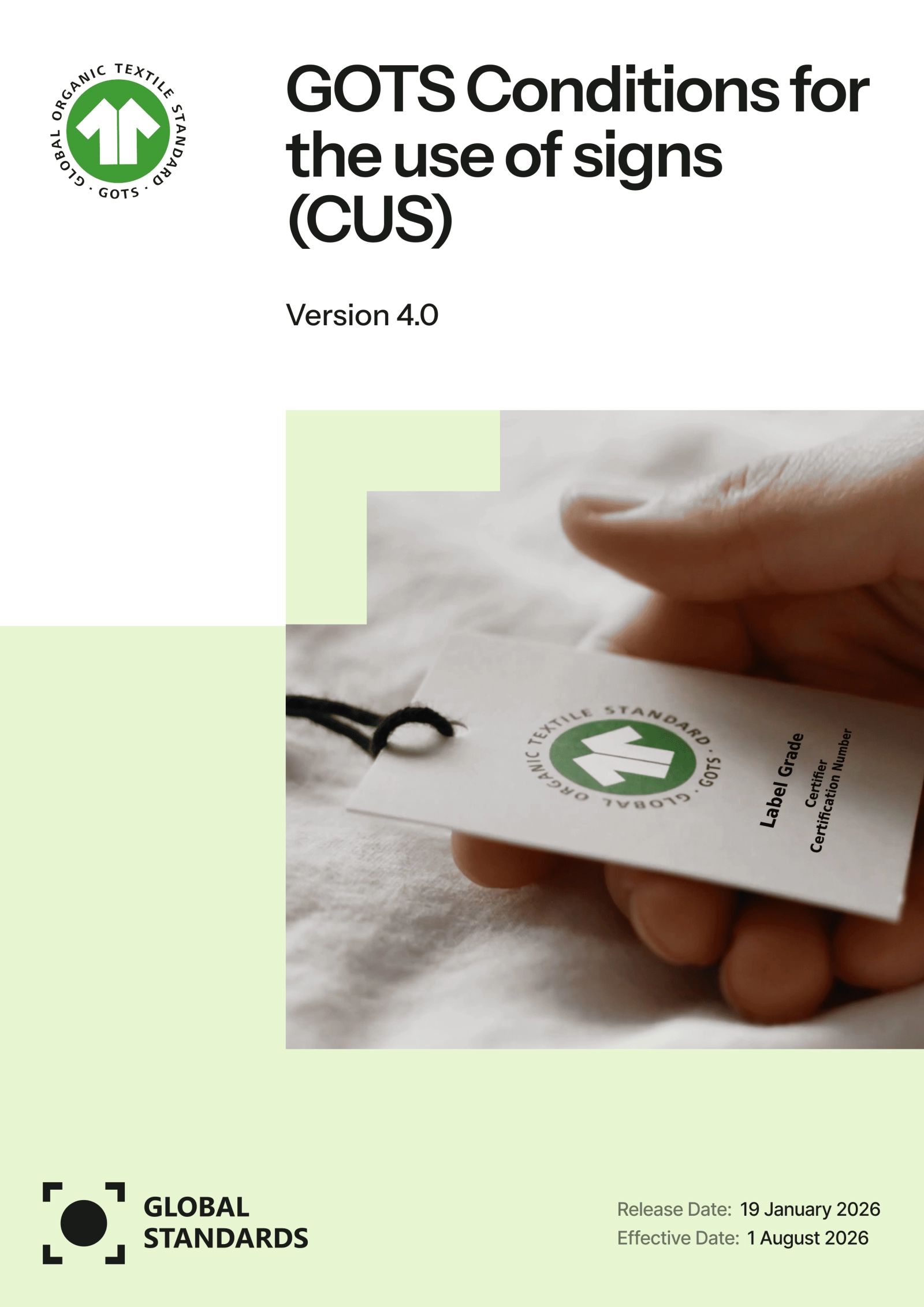
GOTS label grades
GOTS label grades indicate the certified organic-fibre content category of a certified textile product.
- Label grade "Organic" or "Organic in conversion"
Products bearing the ‘Organic’ label grade contain at least 95% certified organic fibres. Those fibres must be certified to an organic production standard accepted by GOTS.
The ‘Organic in-conversion’ label grade applies when products contain a minimum of 95% organic in-conversion fibres. This grade acknowledges efforts toward organic practises while encouraging progress towards full organic status.
The label grade 'organic in-conversion' is allowed in GOTS only where the production standard on which the fibre production is based permits this status. The label grade 'organic in-conversion' will be visible on the GOTS Scope Certificate Products Appendix (see Scope Certificate Template). 'Organic in-conversion' ensures that the supply is meeting a growing demand for organic fibres.


2. Label grade: "Made with Organic" or "Made with Organic-in conversion"
The "Made with Organic" label grade indicates that at between 70% and up 95% of the product's fibres are certified organic or organic in-conversion.
The "Made with organic in-conversion" label grade signifies that a minimum of 70% of the fibres in the product are from farms transitioning to organic certification. This label is a commitment to promoting agricultural practices on the path to full organic certification.


¹ For every consumer-facing use of the ‘Made with’ label grade, state the exact percentage of certified organic fibre together with the required GOTS certification information.
Protection of the GOTS programme
GOTS is a registered certification mark.
Global Standards, together with the Protection Officers, investigates unauthorised, false and/or misleading use of GOTS signs, as well as certification-related claims on products, websites, advertisements, catalogues and other materials.
Corrective and legal measures will be taken to protect the integrity and credibility of the GOTS programme and its labelling system.
Conditions for the Use of Signs - GOTS
The “GOTS Conditions for the Use of Signs (CUS)” defines:
- the requirements for the use of GOTS signs and claims
- labelling and promotional conditions
- trademark usage rules
- approval procedures
- participation fees within the GOTS programme
The document helps support consistent application of GOTS signs across products and communication materials worldwide. Additionally, to support the correct use of GOTS signs, Global Standards offers the LMS training course “How to use the GOTS certification mark correctly,” which provides practical guidance on labelling requirements and the Conditions for the Use of Signs.