A registered or unregistered trademark or other sign other than the GOTS Signs.
The term, in context, can also refer to an organisation that controls the design, development, and purchase of final products for sale under their own name. In that context, brands may sell to wholesalers, retailers, or directly to consumers. This does not include organisations who sell a branded intermediate product for use in further processing steps.
In 1987, the United Nations Brundtland Commission defined sustainability as “meeting the needs of the present without compromising the ability of future generations to meet their own needs.”
")’ on 24th March 2017 in New Delhi, India. Mr. Sumit Gupta, [GOTS](https://gots.vorschau.website/resources/glossary/gots "The worldwide leading voluntary sustainability standard for the post-harvest textile value chain for certified organic fibres, covering environmental criteria, human rights, social criteria and business conduct.
") Deputy Director [Standards](https://gots.vorschau.website/resources/glossary/standard "standard glossary text
") Development & Quality Assurance, was invited to speak about the “Global [Organic](https://gots.vorschau.website/resources/glossary/organic "'Organic' is a regulated term used to distinguish systems of managed production and products derived therefrom that adhere to principles of health, ecology, fairness and care, and which are certified compliant to an organic standard's regulations by an Approved Certification Body.
GOTS defines organic textiles as being made with fibres from organic agriculture systems that are certified to one of the IFOAM Family of Standards, and that are processed in socially and ecologically responsible ways, in alignment with organic principles.
standard glossary text
") - Introduction & Technical Criteria”. Mr. Gupta explained the technical aspects of the Standard related to fibre usage, dyes/ chemical approval, environment, social compliance, labelling, packaging, etc. He also explained the [traceability](https://gots.vorschau.website/resources/glossary/traceability "The ability to trace the origin of an object back to its source.
In a GOTS context, the ability to trace a GOTS Good as it moves through its supply chain.
A document issued by a GOTS-approved Certification Body for GOTS-certified products, verifying their compliance with the Standard. It provides traceability by listing product details, shipment information and confirming integrity through volume reconciliation process.
") (TC). He further told about the option of covering multiple shipments in a single TC and the newly introduced exclusion for wholly owned subsidiaries of a [retailer](https://gots.vorschau.website/resources/glossary/retailer "A business entity or an online marketplace selling directly and exclusively to an end consumer (DTC operator).
"). He opined that brands can use GOTS as a benchmark to build a sustainable supply chain. They can either encourage their existing suppliers to follow GOTS or can choose from existing GOTS certified suppliers, that are listed on GOTS Public Database. The audience comprised mainly of garmenting companies and wet processing units from India. 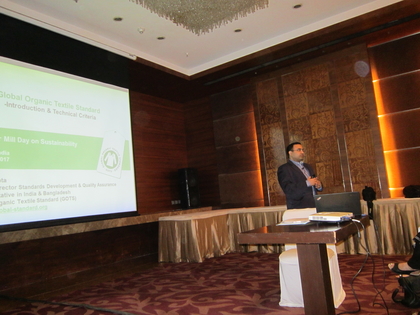 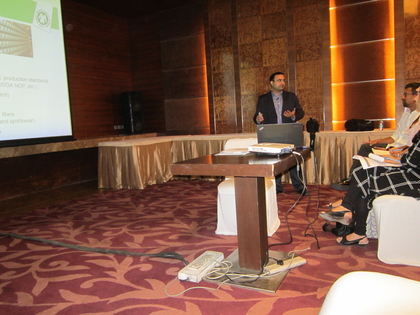 [ Share this page ](#fs-toggle=share)